Direct answer
Trump Mobile FCC robocall mitigation filing scrutiny October 2026: what buyers need to know
Sen. Maggie Hassan's October 8 Joint Economic Committee release said her office asked Trump Mobile and related parties for information on privacy, scam-prevention and FCC compliance, including potential gaps in required filings. Ars Technica and The Washington Post reported the same day that the service appeared to lack some FCC authorizations or public filings at that moment. A public RRMD mirror then showed a new October 9 Robocall Mitigation Database entry for T1 Mobile LLC dba Trump Mobile. For VoIP and mobile buyers, the practical step is not to litigate the politics. It is to ask any MVNO, reseller or branded mobile provider to prove the entity, RMD filing, underlying network route, KYC controls and recovery plan tied to the service actually carrying calls.
This brief cites the source announcement and translates the event into a buyer framework. Verify current vendor terms before changing phone, messaging, or AI routing.
What happened
- The October 8 Senate release said Hassan asked for records on privacy, scam prevention and FCC compliance after questions about Trump Mobile's public filings.
- Ars Technica reported that the brand did not seem to have FCC authorization for phone service at the time of its reporting, while noting the service relied on partners.
- The Washington Post reported similar filing concerns and cited an October 8 letter seeking responses from involved companies.
- A refreshed public RRMD mirror showed an October 9 T1 Mobile LLC dba Trump Mobile entry, which is subsequent public-database evidence but not proof that every questioned filing or control issue was resolved.
Why this is trending
- Branded mobile services can sit on top of reseller, MVNO, carrier and compliance relationships that are hard for buyers to see from marketing pages alone.
- RMD, privacy and scam-prevention questions matter to any organization that depends on a mobile voice route for customer calls, callbacks or verification.
- This is distinct from recent FCC RMD deadline coverage because the buyer asset focuses on branded MVNO route evidence rather than the general rulemaking process.
The VoIP Stack Index take
Consider an illustrative business that buys mobile lines for sales callbacks, field staff or customer verification from a branded MVNO. The buyer may know the brand but not the legal entity, underlying network, RMD filing, reseller role, customer-vetting process or incident response path. Before those lines become customer-facing production routes, the buyer should request route proof tied to the exact service. This framework is an editorial procurement aid, not legal advice or a finding that any particular provider is compliant or noncompliant.
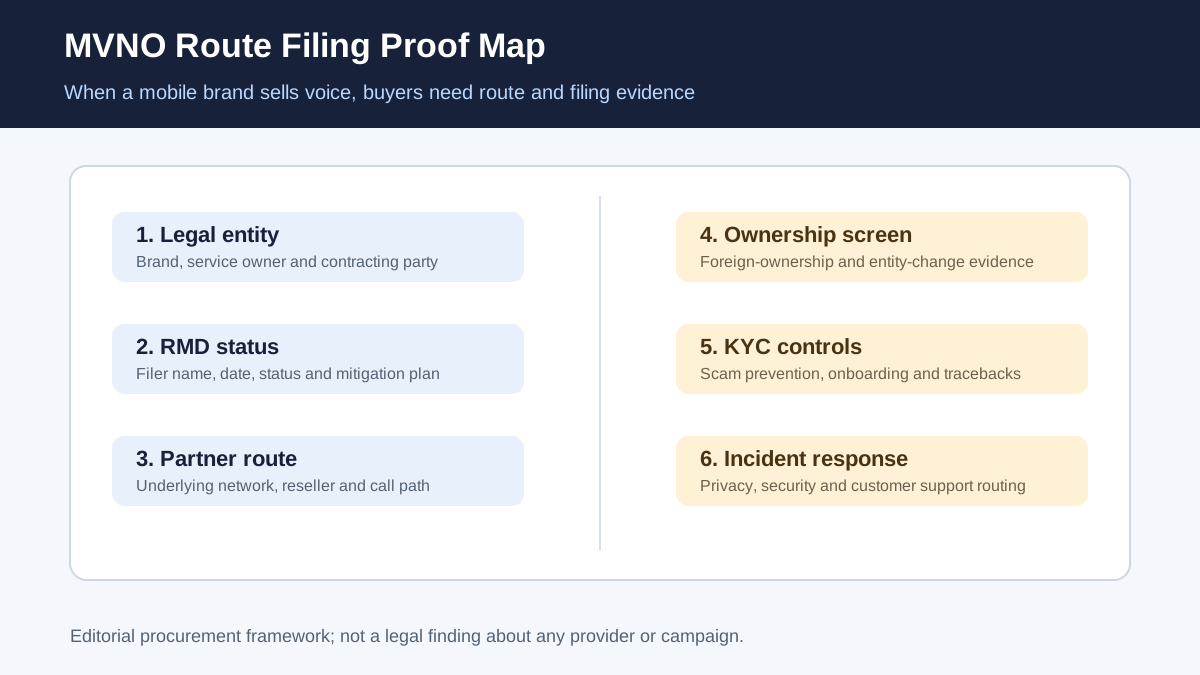
MVNO Route Filing Proof Map
An original buyer map for confirming legal entity, RMD filing, underlying partner route, ownership screening, KYC controls and incident response before relying on an MVNO voice path.
What buyers should do next
Ask branded mobile, MVNO, reseller and CPaaS providers which legal entity and RMD filing support the production route.
Document the underlying network or partner path for customer calls, verification calls and staff mobile lines.
Retain privacy, abuse, KYC, traceback and incident contacts with the route record.
Test an alternate route before a filing, partner or abuse-control challenge interrupts calls.
Keep political or brand narratives separate from verified route, filing and support evidence.
Buyer bridge
Do the routing audit before buying the buzz.
The winning AI phone stack is the one that preserves context, controls fallback, and lets humans take over without making the customer repeat the story.
Run the AI-ready VoIP audit